

Exploring Puerto Rico: A Guide to the Island’s Regions


One of the best things about visiting Puerto Rico is just how much variety you can experience on one relatively small island.
Puerto Rico is approximately 100 miles long and 35 miles wide, yet you’ll find historic cities, tropical rainforest, dry coastal landscapes, coffee-covered mountains, surfing towns, caves, quiet fishing villages and hundreds of beaches.
While many visitors begin their trip in San Juan, there’s much more to discover beyond the metropolitan area.
Here’s a quick introduction to Puerto Rico’s different regions — and what you should know before exploring them.
🌆 Metro — San Juan & the Metropolitan Area
Best for: History • Restaurants • Nightlife • Beaches • Culture
For most travelers, the Metro region is their introduction to Puerto Rico.
San Juan combines more than 500 years of history with modern restaurants, hotels, nightlife, shopping and beautiful beaches.
Don’t Miss
Old San Juan — Walk the colorful streets, plazas and historic fortifications of one of the oldest European-established cities in the Americas.
El Morro & San Cristóbal — Explore San Juan’s enormous Spanish colonial forts overlooking the Atlantic.
Condado — Restaurants, nightlife, shopping, beaches and the beautiful Condado Lagoon.
Santurce — One of the best areas for restaurants, art, nightlife and local culture.
Isla Verde — A long stretch of beach conveniently located near the airport.
Good to Know
You don’t necessarily need a car while staying in central San Juan. Rideshare services are widely available in the metropolitan area, and many neighborhoods are walkable.
Once you begin exploring outside Metro, however, renting a car becomes much more useful.
🌴 East — Rainforest, Beaches & Island Adventures
Best for: El Yunque • Beaches • Boating • Nature • Day Trips
Head east from San Juan and the city quickly gives way to mountains, rainforest and coastline.
The East offers an excellent combination of beaches and outdoor adventures and includes destinations such as Río Grande, Luquillo, Fajardo, Ceiba and Naguabo.
Don’t Miss
El Yunque National Forest — Hike through tropical forest, discover waterfalls and enjoy spectacular mountain views.
Luquillo — Spend the day at the beach before stopping at the famous Luquillo kiosks for food and drinks.
Fajardo — One of Puerto Rico’s major boating centers and a jumping-off point for snorkeling, sailing and trips to nearby cays.
Ceiba — Home to the ferry terminal serving Vieques and Culebra.
Naguabo — A relaxed coastal town known for seafood and beautiful views of the eastern mountains.
Good to Know
Rainfall can vary dramatically over short distances in eastern Puerto Rico. A sunny beach day can quickly turn into a rainforest shower — and then back to sunshine.
Pack a small umbrella or rain jacket and don’t let a little tropical rain ruin your plans.
🏄 West — Surfing, Sunsets & Laid-Back Beach Towns
Best for: Surfing • Beaches • Sunsets • Road Trips • Relaxing
Puerto Rico’s west coast has a completely different personality from San Juan.
Life moves a little slower here, with surf towns, small beaches, dramatic sunsets and a relaxed coastal atmosphere. Discover Puerto Rico describes the West as the island’s center for surfing and sunsets.
Don’t Miss
Rincón — Puerto Rico’s most famous surf town and one of the island’s best places to watch the sunset.
Aguadilla — Beautiful beaches, surfing and easy access to the northwest coast.
Isabela — Dramatic coastline, beaches and excellent scenic drives.
Cabo Rojo — Explore the southwestern tip of Puerto Rico for striking coastal scenery and nature.
Boquerón — A lively seaside village popular for seafood, drinks and weekend outings.
Good to Know
A rental car is practically essential for exploring the West.
Don’t try to see everything in a single rushed day from San Juan. If your schedule allows, spending a night or two on the west coast gives you a much better feel for the area.
And plan to stay for sunset.
🌊 South — History, Caribbean Waters & a Different Side of Puerto Rico
Best for: History • Architecture • Caribbean Coast • Culture • Road Trips
Cross the mountains toward Puerto Rico’s southern coast and the landscape changes noticeably.
The South tends to be drier, and its Caribbean coastline often feels very different from the Atlantic-facing north coast.
The region includes 11 municipalities and combines historic towns, beaches, boating and cultural attractions.
Don’t Miss
Ponce — Puerto Rico’s second-largest historic city and home to beautiful architecture, museums and Plaza Las Delicias.
Parque de Bombas — Ponce’s distinctive red-and-black former firehouse and one of the city’s most recognizable landmarks.
Castillo Serrallés — A historic hilltop estate overlooking Ponce.
Coamo — Visit the area’s famous natural thermal springs.
Guánica — Explore the dry forests and coastline of southwestern Puerto Rico.
La Parguera — A waterfront community known for boating, mangroves and bioluminescent waters.
Good to Know
The southern side of Puerto Rico can feel considerably hotter and drier than the mountains or northeast.
Bring plenty of water and sun protection, particularly when sightseeing during the middle of the day.
🌊 North — Caves, Cliffs & Atlantic Coast
Best for: Caves • Beaches • Coastal Drives • Nature • Adventure
Puerto Rico’s northern region stretches westward from the metropolitan area along a dramatic Atlantic coastline.
This area is particularly known for its limestone karst landscape, caves and striking beaches. Discover Puerto Rico highlights caves, unique topography and beaches as some of the North’s defining attractions.
Don’t Miss
Arecibo — A good base for exploring the northern karst region and nearby coastline.
Cueva del Indio — Dramatic coastal rock formations and ancient Taíno petroglyphs.
Caverns and karst country — Northern Puerto Rico contains some of the island’s most interesting cave and limestone landscapes.
Mar Chiquita — One of Puerto Rico’s most distinctive coastal formations.
Manatí & Vega Baja — Great areas for discovering beaches beyond the major tourist zones.
Good to Know
The Atlantic can be powerful along the north coast.
A beautiful beach isn’t necessarily a safe swimming beach. Rip currents and high surf can occur even on sunny days, so always check current ocean conditions before entering the water.
⛰️ Central Mountains — The Heart of Puerto Rico
Best for: Coffee • Mountains • Local Food • Scenic Drives • Nature
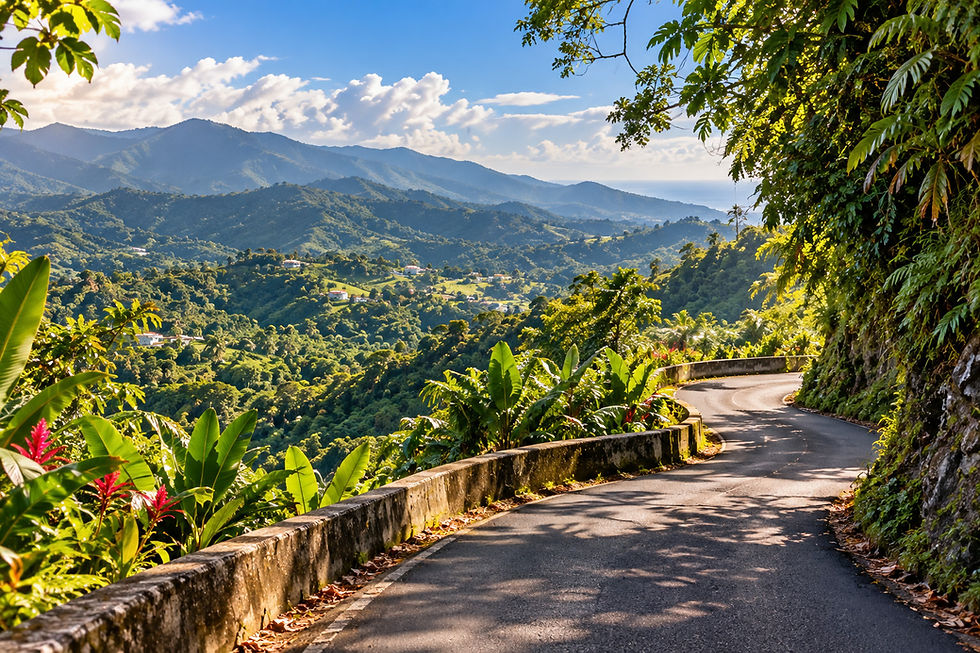
Visitors who only see Puerto Rico’s coastline miss one of the most beautiful parts of the island.
The Cordillera Central runs through Puerto Rico’s interior, creating a landscape of steep mountains, rivers, forests, farms and small towns.
It’s a wonderful place to experience a quieter, more rural side of Puerto Rican life. The region is particularly associated with coffee haciendas, traditional food and outdoor adventures.
Don’t Miss
Coffee Country — Visit a working coffee hacienda and learn how Puerto Rican coffee is grown and produced.
Barranquitas — Mountain scenery, local restaurants and a distinctly rural atmosphere.
Orocovis — Home to mountain adventures and dramatic views.
Toro Negro State Forest — Hiking, waterfalls and some of Puerto Rico’s highest mountain landscapes.
Mountain Chinchorros — Small roadside bars and restaurants are an important part of exploring the countryside.
Good to Know
Driving in the mountains is part of the adventure.
Roads can be narrow, steep and winding, and travel times can be longer than the distance on the map suggests.
Take your time, avoid rushing and enjoy the scenery.
This is one part of Puerto Rico where the journey really can be as memorable as the destination.
🏝️ Exploring Vieques & Culebra — Puerto Rico’s Island Escapes
Best for: Beaches • Snorkeling • Nature • Slowing Down
Puerto Rico is actually an archipelago, and two of its most famous smaller inhabited islands are Vieques and Culebra.
They deserve more than a footnote.
Culebra
Culebra is known for crystal-clear water, snorkeling and spectacular beaches.
Its most famous attraction is Flamenco Beach, regularly drawing visitors for its broad arc of pale sand and turquoise water.
The island has a wonderfully relaxed atmosphere, but services are more limited than on the main island.
Vieques
Vieques combines beautiful beaches, wildlife and one of Puerto Rico’s most extraordinary natural experiences:
Mosquito Bay, famous for its bioluminescence.
Exploring Vieques is less about checking attractions off a list and more about slowing down and enjoying the landscape.
Good to Know
Ferries to both islands depart from Ceiba, not San Juan.
Transportation, ferry tickets and popular excursions can fill up, so plan ahead rather than treating Vieques or Culebra as a completely spontaneous day trip.
For the best experience, consider staying overnight.
🚗 How Long Does It Take to Explore Puerto Rico?
Puerto Rico looks small on a map — because it is.
But don’t underestimate driving times.
Traffic around San Juan, winding mountain roads and smaller coastal highways can make journeys take longer than expected.
Instead of trying to “drive the whole island” in one day, choose a region and explore it properly.
A typical vacation might include:
San Juan + El Yunque + the East Coast
while a longer visit might add:
The Central Mountains + Ponce + the West Coast
There’s always something worth saving for your next trip.
Every Region Tells a Different Story
There isn’t one single version of Puerto Rico.
San Juan tells the story of centuries of history and modern city life.
The East brings rainforest and tropical cays.
The West brings surf culture and spectacular sunsets.
The South offers Caribbean landscapes and historic towns.
The North reveals caves, cliffs and the island’s dramatic Atlantic coast.
And the Central Mountains introduce you to coffee farms, small towns and Puerto Rico’s rural traditions.
So while the beach may have brought you here, don’t be afraid to get in the car and explore.
Some of the best memories of Puerto Rico happen when you leave the main tourist areas behind and discover just how different one part of this little island can be from another.
Take your time, explore beyond San Juan, eat somewhere local and enjoy the journey.


Comments