

Wildlife on land in Puerto Rico: What You Might Encounter & What to Do

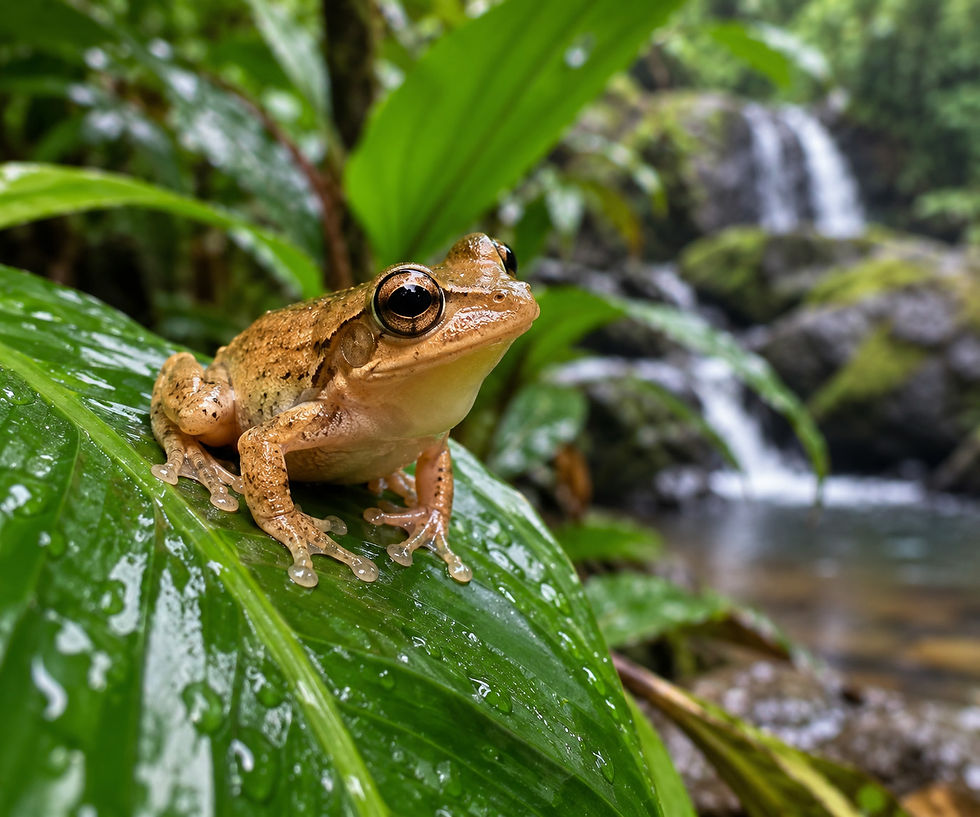
One of the pleasures of visiting Puerto Rico is discovering that wildlife is everywhere.
Tiny coquí frogs call from the trees after dark. Lizards dart across patios. Iguanas sun themselves beside roads. Pelicans dive into the ocean, and sea turtles occasionally surface just offshore.
Head into the rainforest, mountains or nature reserves and there’s even more to discover.
Most of Puerto Rico’s wildlife wants absolutely nothing to do with you — and that’s a good thing.
The general rule is easy:
Enjoy wildlife from a distance, don’t feed it, don’t touch it and let it go about its day.
Here’s what you might encounter during your Puerto Rico vacation — and what you should do when you do.
🛡️ A Special Note About Protected Wildlife in Puerto Rico
Puerto Rico is home to several rare species that are protected under federal or Puerto Rico conservation laws.
For visitors, you don’t need to memorize the laws. Just remember a simple rule:
If it’s wild, leave it wild.
Never capture an animal, take it home, remove eggs or young, disturb a nest, intentionally chase wildlife, or interfere with an animal just to get a photograph.
This is especially important with endangered and threatened species such as Puerto Rican parrots, sea turtles, manatees and the Puerto Rican crested toad, as well as other protected native wildlife.
If you encounter one of these animals, consider yourself lucky.
Keep your distance, take your photograph and let the animal continue doing whatever it was doing before you arrived.
🐸 Coquí — The Sound of Puerto Rico
You may hear Puerto Rico’s most famous animal long before you see one.
The tiny coquí frog gets its name from the distinctive ko-kee! call heard throughout much of the island, particularly after dark.
For Puerto Ricans, that sound is an unmistakable part of home.
You may hear coquíes around your vacation rental, in gardens, in the mountains and especially in places such as El Yunque.
What Should You Do?
Nothing!
Listen and enjoy.
Coquíes are small, harmless and surprisingly difficult to spot.
If one finds its way onto a patio or near your accommodation, simply leave it alone.
And if the sound wakes you up during your first night in Puerto Rico?
Give it a day or two. Or consider packing earplugs!
You might miss it when you go home.
🦎 Lizards & Geckos
Small lizards are extremely common throughout Puerto Rico.
You’ll see anoles running along walls, fences, trees and gardens during the day, while little geckos often appear around buildings after dark.
They’re harmless and generally run away as soon as you approach.
Occasionally, a tiny lizard or gecko may even find its way inside.
What Should You Do?
Don’t worry.
Open a door or window and give it an opportunity to leave, or simply leave it alone.
They aren’t interested in you.
Please don’t spray or kill a lizard simply because it wandered indoors.
In a tropical environment, seeing the occasional little visitor is normal. And they help out by controlling unwanted insects!
🦎 Iguanas — You’ll Probably See Plenty
One animal visitors notice immediately is the green iguana, known locally as gallina de palo.
You may see them in parks, golf courses, mangroves, along roads, beside lagoons and even climbing trees in urban neighborhoods.
Some become surprisingly large.
Here’s something visitors often don’t realize:
Green iguanas aren’t native to Puerto Rico.
They were introduced through the pet trade and have become an invasive species.
What Should You Do?
Give them space.
Iguanas usually want to get away from people, but a large animal can defend itself if cornered or handled.
Don’t try to pick one up.
Don’t chase one for a photograph.
And don’t feed them.
If one is sitting beside a path, simply walk around it.
Watch the Trees!
Here’s a very Puerto Rico-specific warning:
Look up occasionally.
Iguanas are excellent climbers and often rest on tree branches.
They can lose their grip or suddenly jump from a tree, which can be quite a surprise when you’re standing underneath one. And like all animals in nature, they too need to “relieve themselves” once in a while!

🐍 Puerto Rican Boa — A Native Conservation Success Story
Visitors are sometimes surprised to learn that Puerto Rico has snakes.
The good news is that snake encounters are relatively uncommon.
One of the island’s most impressive native reptiles is the Puerto Rican boa, a large snake found nowhere in the wild outside Puerto Rico.
The boa was historically placed on the federal endangered species list after widespread deforestation dramatically reduced its habitat and population. Decades of forest recovery, habitat protection and conservation have helped the species recover substantially.
That’s an encouraging conservation story — and a reminder of why protecting native wildlife matters.
Despite its size, the Puerto Rican boa is not venomous. It feeds on animals such as rodents, bats, birds, frogs and lizards and actually provides a useful form of natural pest control.
Boas generally try to escape when they encounter humans.
What Should You Do?
Leave it alone.
Don’t try to catch, move or photograph it from two feet away.
Never attempt to take a boa home or keep one as a pet.
Simply give the snake plenty of space and allow it to leave.
If you encounter a large snake around a house or populated area and aren’t sure what you’re looking at, keep children and pets away and contact local authorities or the property manager rather than attempting to handle it yourself.
🐍 Puerto Rican Racer — Yes, Puerto Rico Has a Venomous Snake
Another native snake you might encounter is the Puerto Rican racer, commonly called the corredora.
The Puerto Rican racer is the second-largest native snake on the island, after the Puerto Rican boa, and can grow to more than three feet long. Its coloration varies from light brown to very dark brown or nearly black, which sometimes causes people to confuse it with other snakes.
Unlike the Puerto Rican boa, the racer is mildly venomous.
Its venom is primarily used to subdue prey such as lizards, frogs and other small animals. The snake delivers venom through enlarged teeth toward the rear of its mouth, so it isn't equipped like a viper with large front fangs.
For humans, a bite isn't generally considered life-threatening, but that doesn't mean you should handle one. Puerto Rico's Department of Natural and Environmental Resources notes that a prolonged bite can cause swelling and other complications.
The racer is active primarily during the day and can be found on the ground, among rocks and vegetation, and occasionally climbing trees. It feeds on lizards, frogs, other snakes and other small animals.
Despite its name, don't expect it to chase you down a hiking trail.
Like most snakes, it would generally prefer that you leave it alone. However, when threatened or cornered, a racer can become surprisingly defensive. It may raise or flatten the neck somewhat and strike repeatedly in an attempt to make the perceived threat back away.
What Should You Do?
Give it space and let it leave.
Don't try to pick it up, move it, trap it or test whether it's really venomous.
If you're hiking and see one crossing the trail, stop and give it enough room to continue on its way.
If you encounter one around your vacation rental, keep children and pets away and contact your host or property manager if assistance is needed.
If you're bitten, wash the area thoroughly with soap and clean water and seek medical attention, particularly if you experience significant pain, swelling or other symptoms.
And remember: seeing a snake in Puerto Rico isn't a reason to panic.
The boa and racer are both important native predators that help maintain the island's ecosystem by controlling populations of other animals.
Watch from a respectful distance, take a photograph if you can do so safely, and let the snake continue on its way.
🐢 Sea Turtles — Some of Puerto Rico’s Most Important Protected Visitors

Seeing a sea turtle in Puerto Rico is special.
Puerto Rico’s waters and beaches provide important habitat for several species, including:
Leatherback turtle — TinglarHawksbill turtle — CareyGreen sea turtle — Tortuga verde
The enormous leatherback is the largest sea turtle in the world and can reach extraordinary sizes.
Both the leatherback and hawksbill are federally endangered, while Atlantic populations of the green sea turtle are federally threatened.
Puerto Rico’s beaches are particularly important because female turtles return to shore to lay their eggs.
During nesting season, you may notice sections of beaches marked with stakes, tape or signs. These aren’t arbitrary restrictions — there may be a sea turtle nest beneath the sand.
If You See a Nesting Turtle
This can be an incredible experience, but the turtle needs space and darkness to complete the nesting process.
Stay well back.
Remain quiet.
Don’t stand directly in front of her.
Don’t touch her.
Don’t use flash photography.
Don’t shine bright flashlights at her.
And never interfere with the nest.
Artificial light and human activity can cause nesting turtles to become disoriented or abandon nesting attempts.
If You See Hatchlings
Baby sea turtles instinctively move toward the ocean after emerging from their nests.
Don’t pick them up and carry them to the water.
Don’t surround them for photographs.
Don’t shine lights at them.
Don’t try to “help” unless an authorized conservation professional instructs you to do so.
Give them space and allow trained personnel to intervene if necessary.
If You See a Turtle While Snorkeling
Enjoy one of the best wildlife encounters Puerto Rico can give you.
But don’t chase it.
Don’t grab its shell.
Don’t try to ride it.
And don’t surround it with swimmers.
Let the turtle control the encounter.
A sea turtle choosing to swim near you is much more special than forcing yourself near a sea turtle.
🐄 Antillean Manatee — A Rare Puerto Rican Treasure
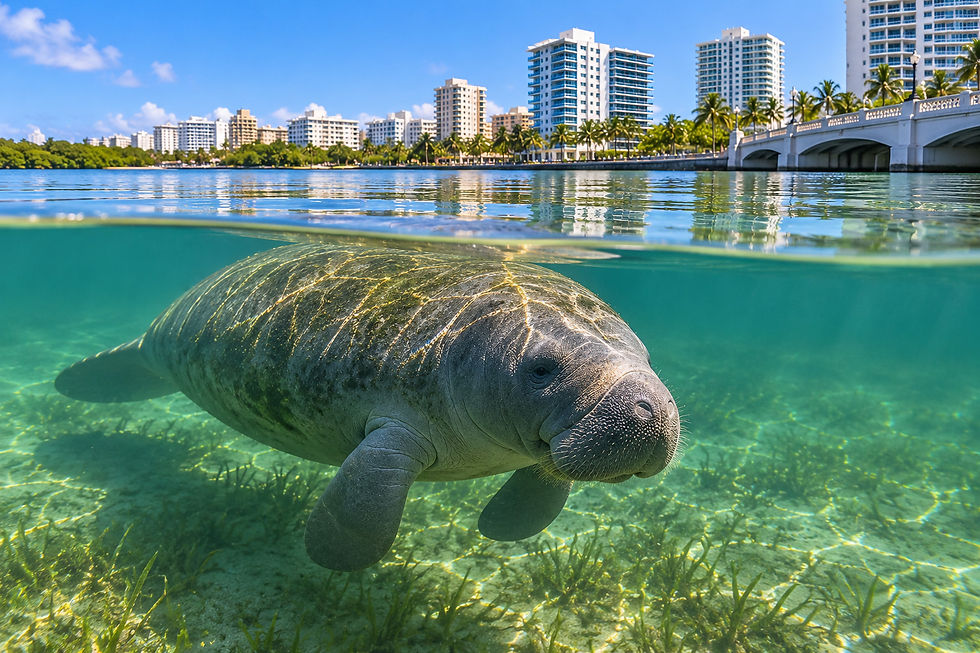
Puerto Rico is home to the Antillean manatee, a subspecies of the West Indian manatee.
These large, gentle herbivores live around coastal waters, bays, estuaries and lagoons, where they feed primarily on aquatic vegetation such as seagrasses.
The manatees found around Puerto Rico are an important conservation population.
Manatees face several human-related threats, particularly boat strikes, habitat loss, entanglement in fishing gear and marine debris.
They are federally protected under both the Endangered Species Act and Marine Mammal Protection Act.
That means a manatee isn’t an animal to swim after, touch or lure closer for a photograph.
If You’re Kayaking or Paddleboarding
If you see a manatee, stop and enjoy the moment.
Don’t paddle toward it.
Don’t surround it.
Don’t block its route to deeper water.
And never separate a mother from her calf.
Allow the animal to decide whether it wants to remain nearby.
If You’re Boating
Manatees can be difficult to see from a moving boat because much of their body remains underwater.
Slow down in designated manatee areas and shallow seagrass habitats.
Watch for noses, backs, tails or circular patterns appearing at the surface.
Boat collisions are one of the major threats these animals face.
Don’t Feed or Give Water to Manatees
It may seem kind to offer a manatee food or fresh water.
Don’t.
Feeding or providing water can encourage wild manatees to associate boats, docks and people with resources, increasing their risk of dangerous interactions.
If you’re fortunate enough to see one:
Slow down, keep your distance and enjoy watching quietly.
🦜 Puerto Rican Parrot — One of the Island’s Rarest Residents
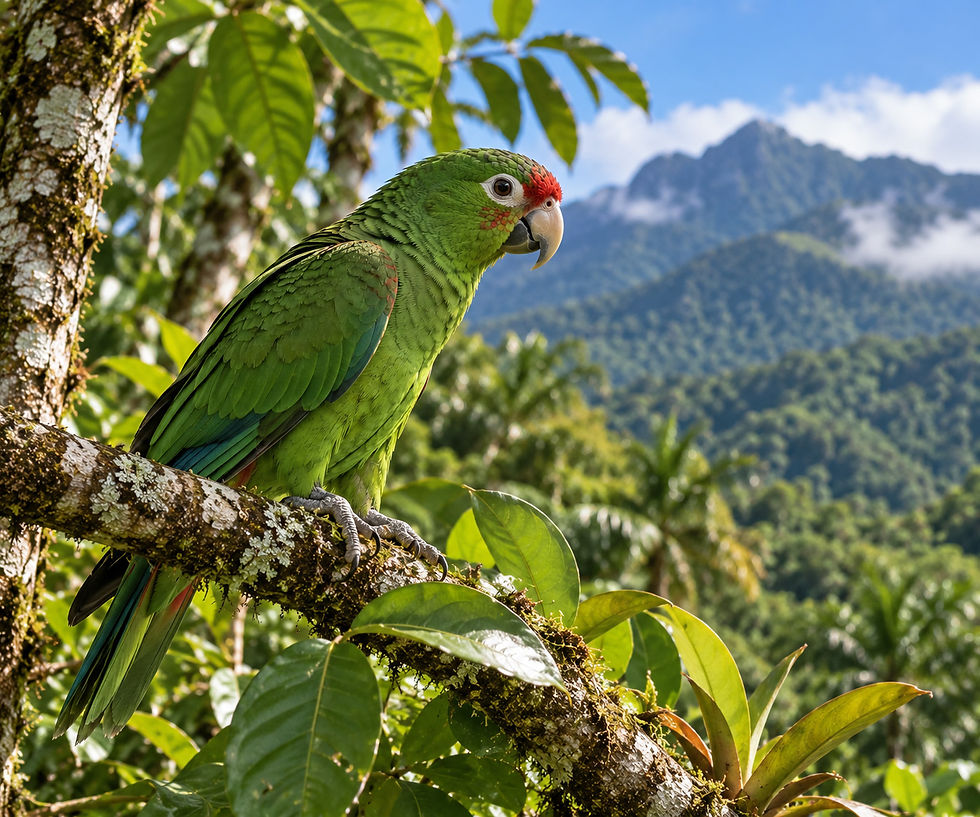
The Puerto Rican parrot, or cotorra puertorriqueña, is one of Puerto Rico’s most important conservation stories.
Also known as the iguaca, this beautiful green parrot is endemic to Puerto Rico, meaning it naturally exists nowhere else in the world.
It was once widespread across the island.
Habitat destruction, hurricanes, predators and other pressures eventually pushed the species dangerously close to extinction.
An intensive recovery program involving captive breeding, habitat management, nest protection and releases into the wild has been working for decades to rebuild the population.
Today there are wild populations associated with El Yunque National Forest, Río Abajo State Forest and Maricao State Forest, along with parrots maintained as part of the conservation breeding program.
The species remains federally endangered.
Why Seeing One Is So Special
If you see a Puerto Rican parrot in the wild, you aren’t simply looking at a pretty bird.
You’re seeing the result of decades of work by biologists, conservationists and wildlife managers who helped prevent an animal found nowhere else on Earth from disappearing.
What Should You Do?
Keep your distance.
Use binoculars or a zoom lens rather than approaching.
Don’t feed the birds.
Don’t attempt to attract them with recorded calls.
Never disturb a nest, nesting tree or marked conservation area.
And don’t attempt to collect feathers, eggs or any other part of a protected animal.
If you’re lucky enough to see one:
Stop, watch quietly and appreciate just how special that moment is.
🦀 Land Crabs
Near beaches, mangroves and wetlands, you may encounter surprisingly large land crabs.
They often emerge from burrows and become particularly noticeable around wet weather.
You’ll sometimes even see them crossing roads.
What Should You Do?
Give them room.
Don’t stick your hands into crab burrows.
And when driving near wetlands or mangroves, keep an eye on the road.
Puerto Rico’s wildlife doesn’t always use the crosswalk.
🦀 Hermit Crabs
Much smaller and considerably less intimidating are hermit crabs.
You’ll find them around beaches and coastal vegetation.
Children understandably find them fascinating.
What Should You Do?
Look — don’t collect.
Don’t take hermit crabs home as souvenirs, and don’t remove shells from areas where hermit crabs depend on them for future homes.
Leave the beach ecosystem where you found it.
🦇 Bats
Puerto Rico has several species of bats.
You may see them flying overhead around dusk as they begin feeding.
Most people barely notice them.
What Should You Do?
Leave them alone and enjoy watching them from a distance.
Never handle a bat, even if it appears injured.
If a bat gets inside your accommodation, contact your host or property manager rather than trying to catch it with your hands.
If you wake up and discover a bat in your room, particularly if you aren’t sure whether contact occurred while you were sleeping, seek medical advice promptly.
🐀 Mongoose — Give These Animals Space

You may occasionally see a small Indian mongoose darting across a road, field, trail or parking area.
Mongooses were introduced to Puerto Rico and are now widespread.
They can look cute and curious.
Do not approach or feed them.
This is one animal where keeping your distance is particularly important because mongooses are an important carrier of rabies in Puerto Rico.
What Should You Do?
Simply walk away and give it space.
Never attempt to pet, feed or corner a mongoose.
If one behaves unusually — approaching people, acting disoriented or behaving aggressively — stay away.
If you’re bitten or scratched by a mongoose or another unfamiliar mammal, wash the wound thoroughly with soap and water and seek medical care immediately.
Red-Rumped Agouti — A Surprising Forest Resident
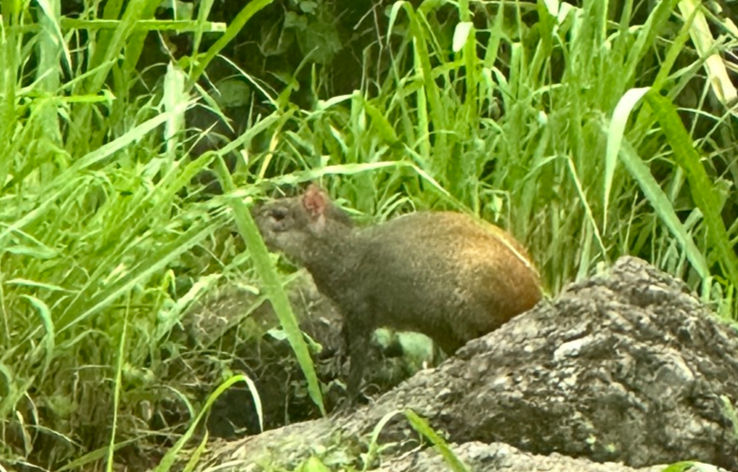
If you spot an animal that looks a little like a giant guinea pig crossed with a tiny deer, you may have encountered a red-rumped agouti.
The red-rumped agouti (Dasyprocta leporina) is a medium-sized rodent with long, slender legs, small rounded ears and coarse brown fur that often becomes reddish or orange around its hindquarters.
Despite looking perfectly at home in Puerto Rico's tropical landscape, agoutis aren't native to Puerto Rico. Their natural range includes parts of northern South America and nearby Caribbean islands, and populations have been introduced to Puerto Rico and several other islands.
Agoutis are primarily active during the day and are generally shy. You may catch one quickly running across a trail, disappearing into thick vegetation or quietly searching the forest floor for something to eat.
They feed largely on fruits, seeds and nuts, sometimes carrying food away and burying it for later. Like squirrels, they don't always return for everything they've hidden, which means forgotten seeds can eventually germinate.
Where Might You See One?
Agoutis prefer areas with plenty of vegetation and food, including forests, wooded areas, gardens and some parks.
You're more likely to encounter one while exploring a natural area than walking around central San Juan.
If you do see one, watch how it moves.
Agoutis have noticeably longer legs than guinea pigs and often sit upright on their hind legs while holding food between their front paws.
They can also run surprisingly fast when startled.
What Should You Do?
Enjoy it from a distance.
Agoutis are generally shy and aren't looking for an interaction with you.
Don't chase one through the vegetation trying to get a photograph.
Don't attempt to touch or capture it.
And most importantly, don't feed it.
Feeding wild animals can make them lose their natural fear of people, alter their normal feeding behavior and encourage them to congregate around areas used by humans.
If an agouti appears near your vacation rental or while you're hiking, there's usually nothing you need to do.
Stop for a moment.
Take a photograph from a respectful distance.
Then let this unusual little resident continue searching the forest floor for its next meal.
🐕 Stray Dogs & Cats
You’ll occasionally encounter free-roaming dogs and cats around Puerto Rico.
Many are perfectly friendly.
But you don’t know their health, vaccination status or temperament.
What Should You Do?
Don’t automatically approach an unfamiliar animal just because it looks friendly.
Avoid touching animals that appear injured, sick, frightened or unusually aggressive.
If you want to help a stray animal, contact a local rescue organization rather than attempting to capture it yourself.
A bite or scratch from an unfamiliar mammal should be taken seriously.
🐊 Caimans — Rare, But They Exist

This one surprises a lot of visitors.
Puerto Rico has established populations of introduced caimans in some freshwater environments and wetlands.
Most visitors will never encounter one.
But they’re here.
What Should You Do?
If you see a caiman, stay well away from it.
Don’t approach for a photograph.
Don’t feed it.
Don’t allow children or pets near it.
If one appears in an urban or residential area, contact Puerto Rico’s Department of Natural and Environmental Resources rather than attempting to move it yourself.
🐸 Puerto Rican Crested Toad — An Endangered Native

Most of the large toads visitors see around homes and roads aren’t the animal we’re talking about here.
The Puerto Rican crested toad, or sapo concho, is a rare native species and is federally endangered.
It is Puerto Rico’s only native toad.
Historically, the species occurred across a much larger portion of the island, but habitat loss and competition and predation from introduced species contributed to its decline.
Today, conservation programs work to protect breeding habitat and strengthen wild populations.
Crested toads spend much of their lives hidden in limestone cavities and other protected places, emerging under the right conditions — particularly around periods of heavy rain — to reproduce in temporary pools.
That means most visitors will never see one.
What Should You Do?
If you think you’ve found one, don’t pick it up.
Don’t move it to a different pond.
Don’t take it home.
Don’t disturb breeding pools or surrounding limestone habitat.
Take a photograph from a respectful distance and allow the animal to continue on its way.
If you’re uncertain whether you’re looking at a rare native toad or one of Puerto Rico’s much more common introduced toads, the safest approach is simple:
Leave it alone.
🏡 Wildlife Around Your Vacation Rental in Puerto Rico
Even in urban areas, you may see geckos, lizards, coquíes, birds and occasionally iguanas around your accommodation.
In mountain, rainforest and rural properties, expect even more interaction with nature.
Seeing wildlife doesn’t mean a property is dirty or poorly maintained.
You’re staying on a tropical island.
Keep food sealed, don’t leave doors open unnecessarily, turn off unneeded exterior lights and avoid leaving food outside that could attract animals.
If something larger or potentially dangerous enters the property, contact your host or property manager rather than attempting to remove it yourself.
⚠️ If You’re Bitten or Scratched
Any bite or scratch from an unfamiliar mammal deserves attention.
Immediately:
Wash the area thoroughly with soap and clean running water.
Then seek medical advice promptly.
This is especially important following contact with a mongoose, bat, unfamiliar dog or other wild mammal because of the potential risk of rabies.
Don’t wait until the end of your vacation to mention it.
📞 When to Call for Help
If you encounter a potentially dangerous wild animal in an urban or residential area — particularly a caiman or large snake — don’t attempt to capture it.
Move away.
Keep children and pets inside or at a safe distance.
Puerto Rico’s Department of Natural and Environmental Resources (DRNA) advises the public to contact its Ranger Corps (Cuerpo de Vigilantes) for assistance with potentially dangerous wildlife.
If you encounter an injured, stranded or endangered animal, don’t attempt a rescue yourself. Contact the appropriate wildlife authorities or conservation personnel so trained professionals can respond.
And if there is an immediate threat to human safety, call 911.
📸 The Best Wildlife Rule in Puerto Rico
Puerto Rico’s wildlife is part of what makes the island special.
Take pictures.
Listen to the coquíes.
Watch pelicans fish.
Look for hummingbirds.
Get excited when an iguana runs across the road.
Hope you spot a sea turtle while snorkeling.
And recognize that occasionally you may be fortunate enough to encounter an animal that conservationists have spent decades trying to save.
But remember:
Wild animals aren’t pets, props or souvenirs.
Give them room.
Don’t feed them.
Don’t touch them.
Don’t remove them from their habitat.
Never disturb a nest, eggs or young animals.
And don’t put yourself — or the animal — at risk just to get a better photograph.
When you encounter protected wildlife, the best thing you can do is leave it exactly as you found it.
Sometimes the best wildlife encounter is simply stopping for a moment, watching quietly and letting Puerto Rico come to life around you.


Comments